
Conservation of modern and contemporary works on paper
For collectors, galleries, auction houses, artist foundations, and institutions. Every inquiry begins with the work’s condition and material history.
01 Conservation Treatment · 02 Condition Reports · 03 Assessments & Surveys · 04 Preventive Care · How an inquiry proceeds
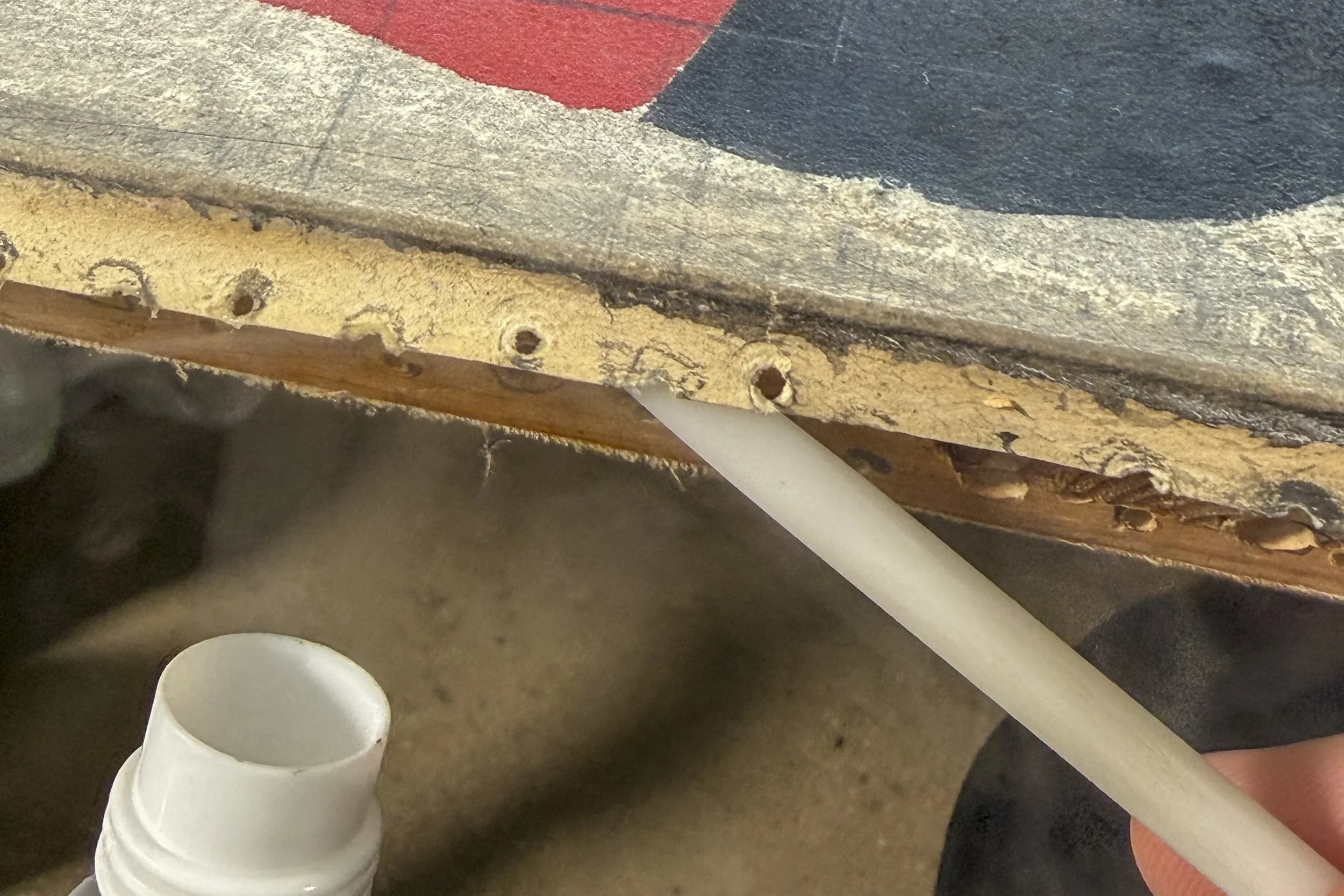
Work on paper adhered to a wooden stretcher: lifting with nebulizer and Delrin tool.
01
Conservation Treatment
Novak Studios provides conservation treatment for modern and contemporary works on paper. The studio treats prints, drawings, watercolors, and mixed-media works for private collectors, galleries, auction houses, artist foundations, and institutions.
Treatment designed for the individual work
Conservation treatment is intervention to repair or stabilize damage while preserving the artist’s intent. Each work presents a different combination of material, history, condition, and intended use. Treatment is therefore designed individually, with structural stability and the integrity of the original surface as the priorities.
Paper is a structurally active support. It responds to humidity, light, atmospheric pollutants, and the adhesives and mounts applied to it over decades. Modern and contemporary works can add synthetic media, unstable colorants, coated and engineered papers, and materials the artist never intended to last.
Works we treat
The studio’s work is confined to a single material class. We treat prints and multiples, including screenprints, lithographs, etchings, and monotypes; drawings in graphite, charcoal, chalk, ink, and pastel; watercolors and works in gouache; acrylic and other synthetic media on paper and paper-like supports; mixed-media and collage works on paper; and bound volumes, artists’ books, and archival material on paper.
We do not treat paintings on canvas, textiles, or photographic materials. When an inquiry falls outside the studio’s specialty, we say so and refer it to a conservator who works in that area.
Beginning a treatment inquiry
The first useful step is a description of the work and, where possible, photographs of the recto and verso. This gives the studio enough context to begin a conversation about the work’s condition, whether it needs intervention, whether it needs intervention now, and whether Novak Studios is the right studio for the question.
Read the guide: Preparing a Conservation Inquiry for a Work on Paper
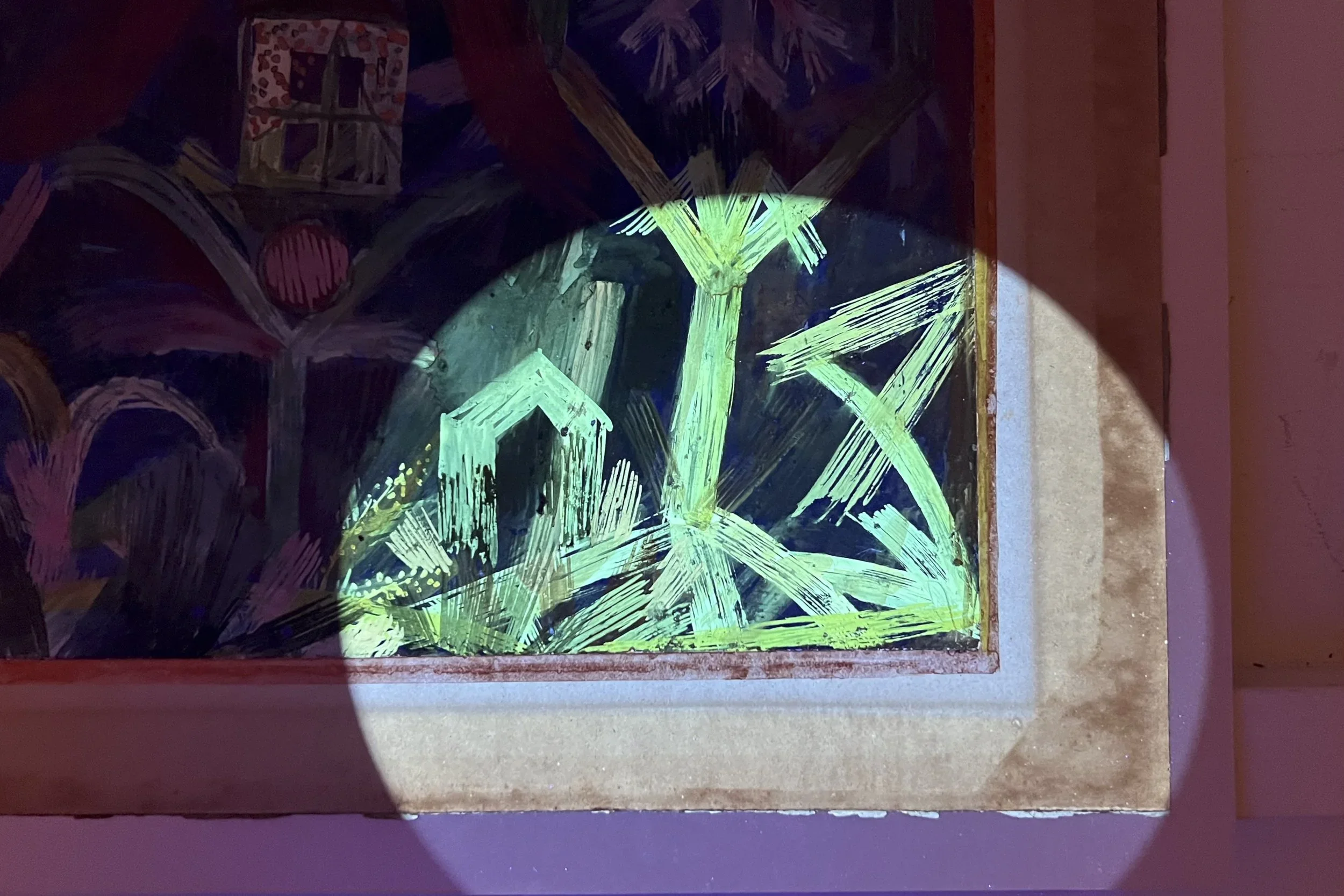
Examination under ultraviolet light, detail.
02
Condition Reports
Novak Studios prepares written condition reports recording the state of an artwork at a specific moment. Reports support decisions around sale, loan, insurance, shipment, and long-term collection records.
A record at a specific point in time
A condition report documents the physical state of a work as it is examined. For a work on paper, that record can be especially useful because paper responds to environmental conditions, light, handling, mounts, adhesives, and its own material history.
The report provides a structured basis for future comparison. It can be used to establish a record before a change of custody, before travel, during insurance planning, or as part of a collection’s ongoing documentation.
Reports for the decisions around a work
Collectors, galleries, auction houses, artist foundations, and institutions may need a condition record for different reasons. The same underlying purpose applies in each case: to describe the work’s state clearly at the moment the report is prepared and to support the next decision responsibly.
When a treatment question is identified during an examination, the studio can discuss whether conservation treatment, a separate assessment, or preventive care guidance is the appropriate next step.
Requesting a report
Please send a short description of the work, its current location, and the reason the report is needed. Photographs of the recto and verso are helpful when available.
Read the guide: What a Condition Report Records for a Work on Paper
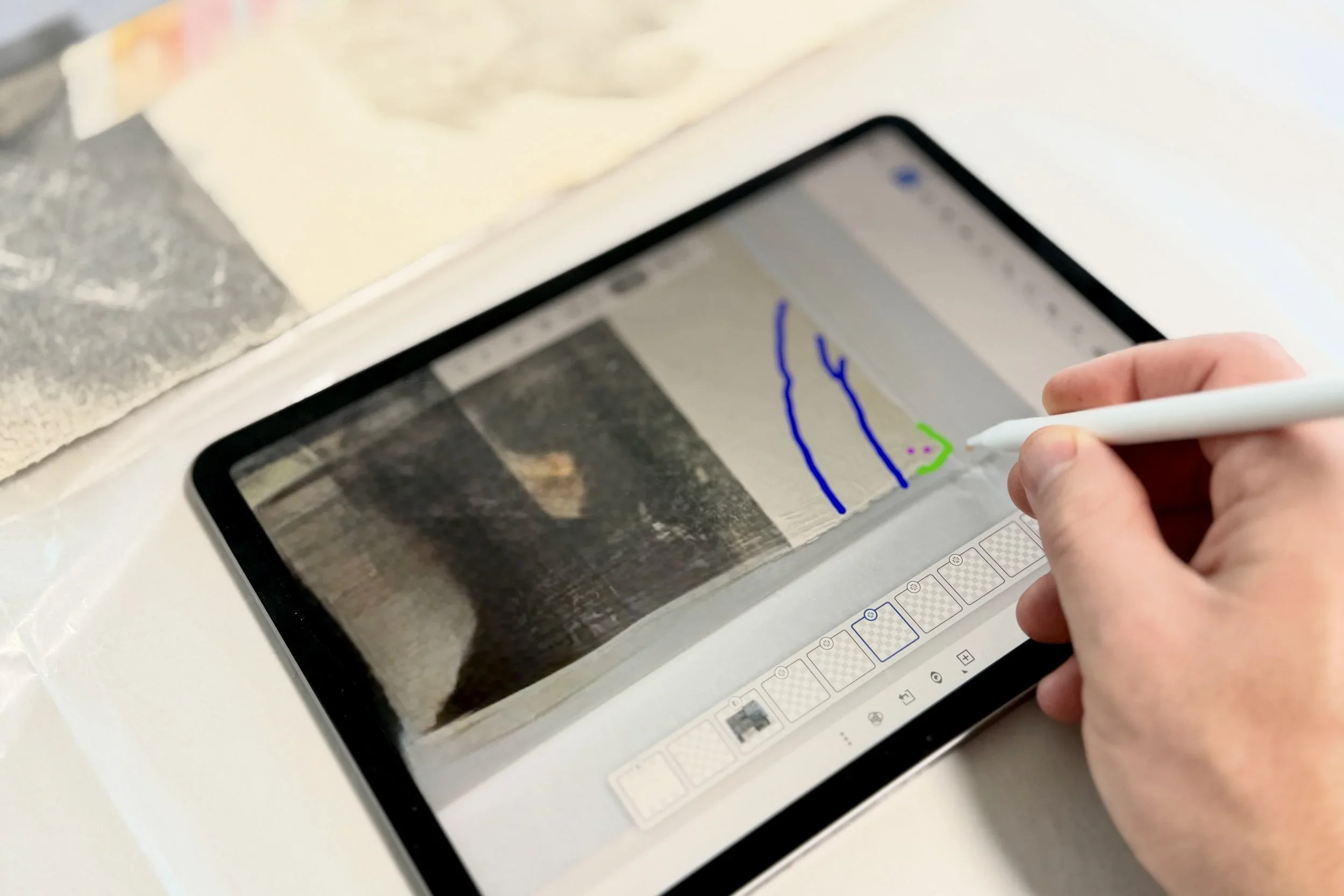
Condition mapping on a tablet beside the work.
03
Collection Assessments and Surveys
Novak Studios provides verbal and written evaluation of individual works and entire collections. An assessment identifies risks, establishes conservation priorities, and produces a sequenced plan for care.
From individual work to collection-wide priorities
An individual artwork may raise an immediate question. A collection may require a broader view of condition, environmental exposure, storage, handling, or treatment priority. An assessment brings those questions into an ordered framework so that decisions can be made with the collection’s condition and intended use in mind.
The studio’s work includes assessments and survey planning for collections with many works. The objective is not to treat every object at once. It is to identify what requires attention, what can be stabilized through preventive care, and how the work can be sequenced responsibly.
A practical plan for care
A survey or assessment can establish priorities for treatment, documentation, storage, display, environmental review, and future planning. It can clarify the next responsible step for individual works and for a collection as a whole.
Where an inquiry concerns one work rather than a larger group, a focused assessment may be the appropriate starting point. Where a collection requires long-term planning, the same approach can be extended into a staged program.
Starting the conversation
Please describe the collection or group of works, the immediate decision that needs support, and any known concerns. Photographs and existing documentation are useful where available.
Read the guide: Planning Care for a Collection of Works on Paper
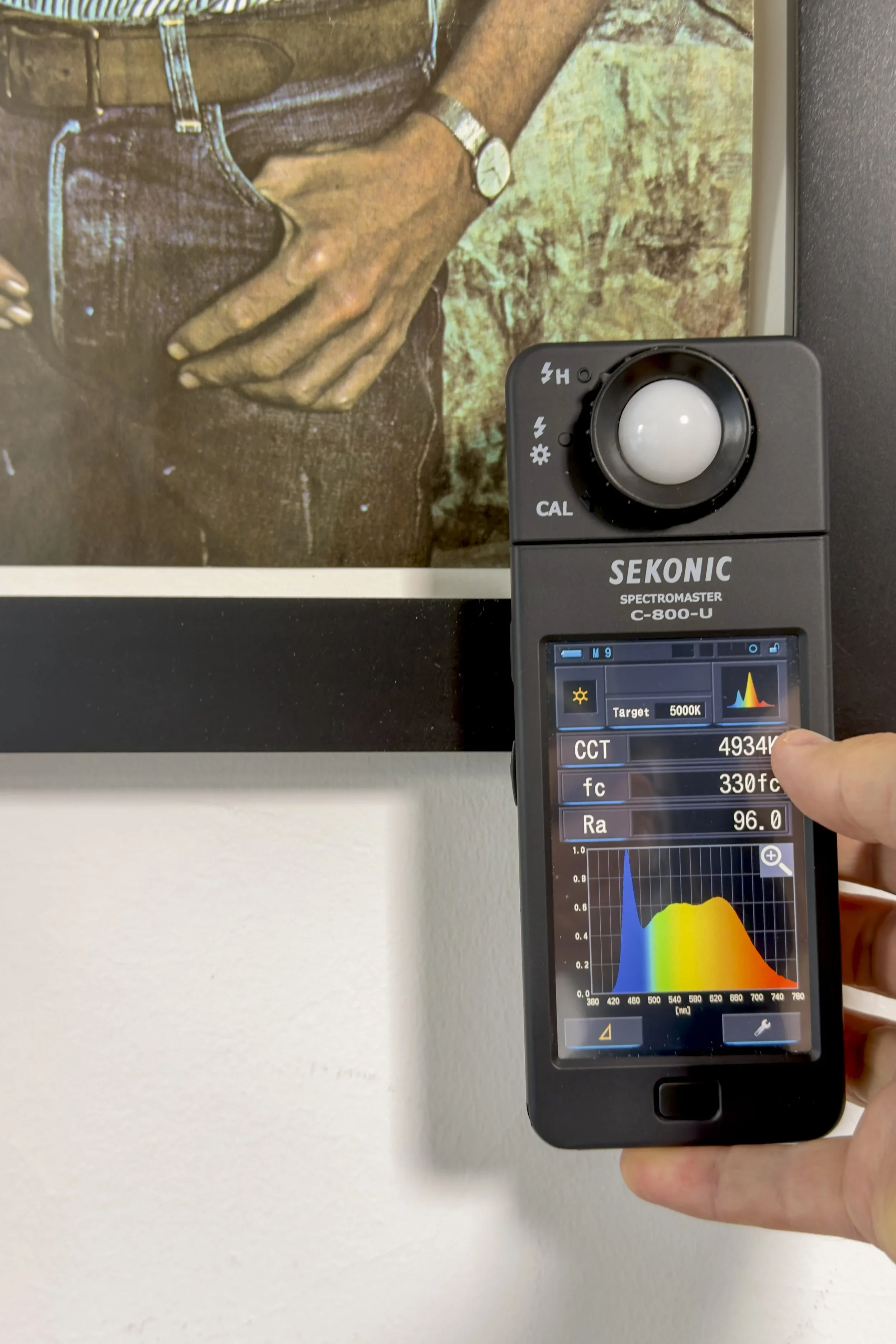
Measuring light levels at a framed work.
04
Preventive Care and Light Exposure Guidance
Novak Studios provides framing, storage, environmental, and display recommendations for modern and contemporary works on paper. The studio also advises on cumulative light-exposure frameworks for works on paper.
Care before treatment is needed
Paper responds to humidity, light, atmospheric pollutants, and the adhesives and mounts applied to it over time. Thoughtful preventive care can reduce the risks created by handling, framing, storage, environmental conditions, and display.
This work is especially important for modern and contemporary material. Synthetic media, unstable colorants, coated and engineered papers, and other materials can create conservation questions that are not resolved by a generic storage or display recommendation.
Guidance for framing, storage, and display
Preventive care guidance can address how a work is framed, stored, handled, displayed, and considered within its environment. It can also frame decisions about cumulative light exposure, which is a central concern for works on paper.
The purpose is to help owners and stewards make choices that respect the work’s material sensitivity and reduce avoidable stress over time. Preventive care may be appropriate on its own or as part of a broader assessment, condition report, or treatment plan.
Requesting guidance
Please send a description of the work, its current setting, and the question you need to resolve. Photographs of the work and its frame, storage, or display context are helpful where relevant.
How an inquiry proceeds
From first email to finished treatment
Send the work. A description and, if possible, photographs of the recto and verso.
An honest answer. Whether it needs intervention, whether it needs it now, and whether we are the right studio for it.
Proposal and estimate. A written Condition & Treatment Proposal sets out the work’s condition, the proposed treatment, and estimated fees. Work begins once the Proposal is signed and the initial payment is received.
Treatment and documentation. The work is treated as described in the Proposal, and the treatment is documented. We let you know when it is ready for collection.
All work is governed by the Standard Terms and Conditions.
Next